EPS panels cost less and are the mainstay of cool room building in Australia. PIR panels insulate about twice as well for the same thickness, so they are chosen where walls must be thin or temperatures are very low. Where there is room for a thicker wall, EPS reaches the same insulation for less.
- EPS conductivity
- About 0.042 W/mK
- PIR conductivity
- About 0.022 W/mK
- Same insulation
- EPS needs about twice the thickness
- BPAU sells
- EPS and Anti-Flam panels
What EPS and PIR are
Both are rigid foams used as the core of a steel faced panel. EPS is expanded polystyrene, the white foam made of fused beads. PIR is polyisocyanurate, a denser foam that is formed between the steel skins.
EPS-FR is EPS made from fire retardant raw material. It is the grade the panel industry's code of practice calls for in building panels.
Insulation for the thickness
How well a foam insulates is measured by its thermal conductivity. Lower is better. Panel makers publish about 0.042 W/mK for EPS-FR and about 0.022 W/mK for PIR.
The R value of a core is its thickness divided by its conductivity. So at 100 mm thick, makers declare about R 2.4 for EPS-FR and about R 4.5 for PIR. To match PIR, EPS needs roughly twice the thickness.
Published figures move with the grade of foam and with age. CSIRO notes that PIR can lose a little performance over the years as the gas in its cells slowly escapes.
| EPS (EPS-FR) | PIR | |
|---|---|---|
| Thermal conductivity | About 0.042 W/mK | About 0.022 W/mK |
| Declared R value at 100 mm | About 2.4 | About 4.5 |
| Thickness for the same insulation | About twice as thick | Thinner |
| Cost | Lower | Higher |
| Weight at 100 mm | About 12 kg/m² | About 13 kg/m² |
| Typical use | The everyday choice for cool rooms | Thin walls, very low temperatures |
Cost
EPS costs less. CSIRO describes steel faced EPS as the mainstay of cool room construction because of its lower cost. We have not put a dollar figure on the gap, because prices move. Our own prices are always on the panel price list.
Fire
The two foams behave differently in fire. Panel makers describe EPS-FR as melting and shrinking away from a flame and going out when the flame is removed, and PIR as forming a layer of char.
Insurers take a harder line, and point out that any foam core panel can burn if the core is left exposed. Either way, what counts is the test result for the product you are buying. Our fire rating guide explains how to read one.
Weight
Much the same. At 100 mm thick, makers list both at about 12 to 13 kg for each square metre, because the steel skins make up most of the weight.
Where each one is used
Both are sold for cool rooms, freezer rooms and food processing. PIR tends to be chosen where the wall has to be thin, or where an insurer asks for it. EPS is the everyday choice where there is room for a thicker wall.
How to choose
Start with the temperature the room has to hold and the space you have for the walls. If thickness is not a problem, EPS usually does the job for less. If you are not sure, call 1800 377 726 and we will help you work it out.
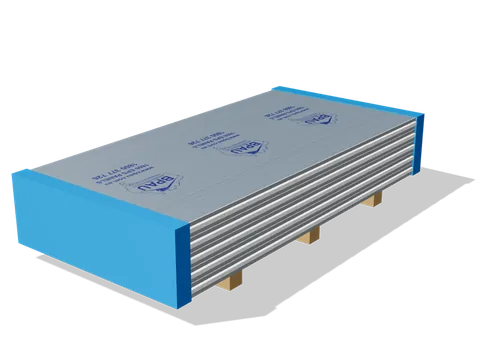
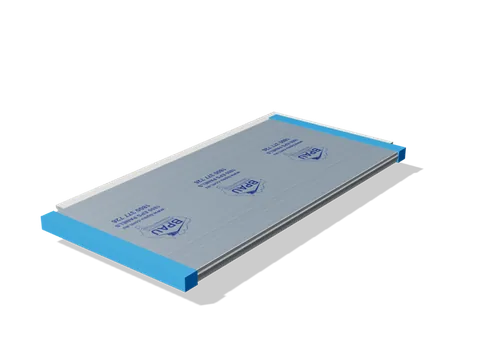
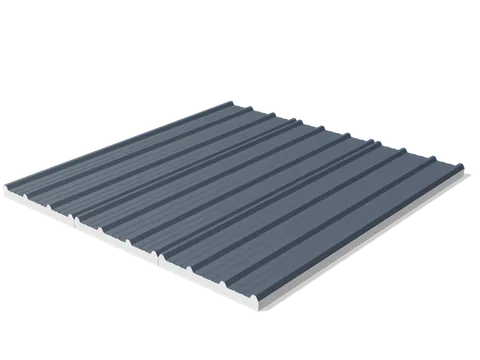
BPAU sells EPS panels in 50, 75 and 100 mm, and fire resistant Anti-Flam panels in 50 and 75 mm.
Products in this guide
- CSIRO: Thermal insulation
- Published data sheets from Australian panel makers (Bondor BondorPanel, Kingspan KS1100 CS)
- Insulated Panel Council Australasia: about panel
- Vero Insurance: EPS sandwich panels, hazards and controls
Facts about BPAU panels come from our own data sheets and certificates, which we supply on request.
Get a quote
Tell us what you're building and the sizes you need. Ask for data sheets and certificates with your quote.
- Phone
- 1800 377 726
- sales@bpau.com.au
- Warehouse
- 4 Cliveden Court, Thomastown VIC 3074